


champions place news

This story was written and distributed across the North Atlanta Metro area by Appen Media Group. Local journalism needs local support to stay alive.
To support Appen Media's work by becoming an Appen Press Club member, visit appenmedia.com/join
Disabled adults find kinship at Champions Place Roswell campus
By HANNAH YAHNE
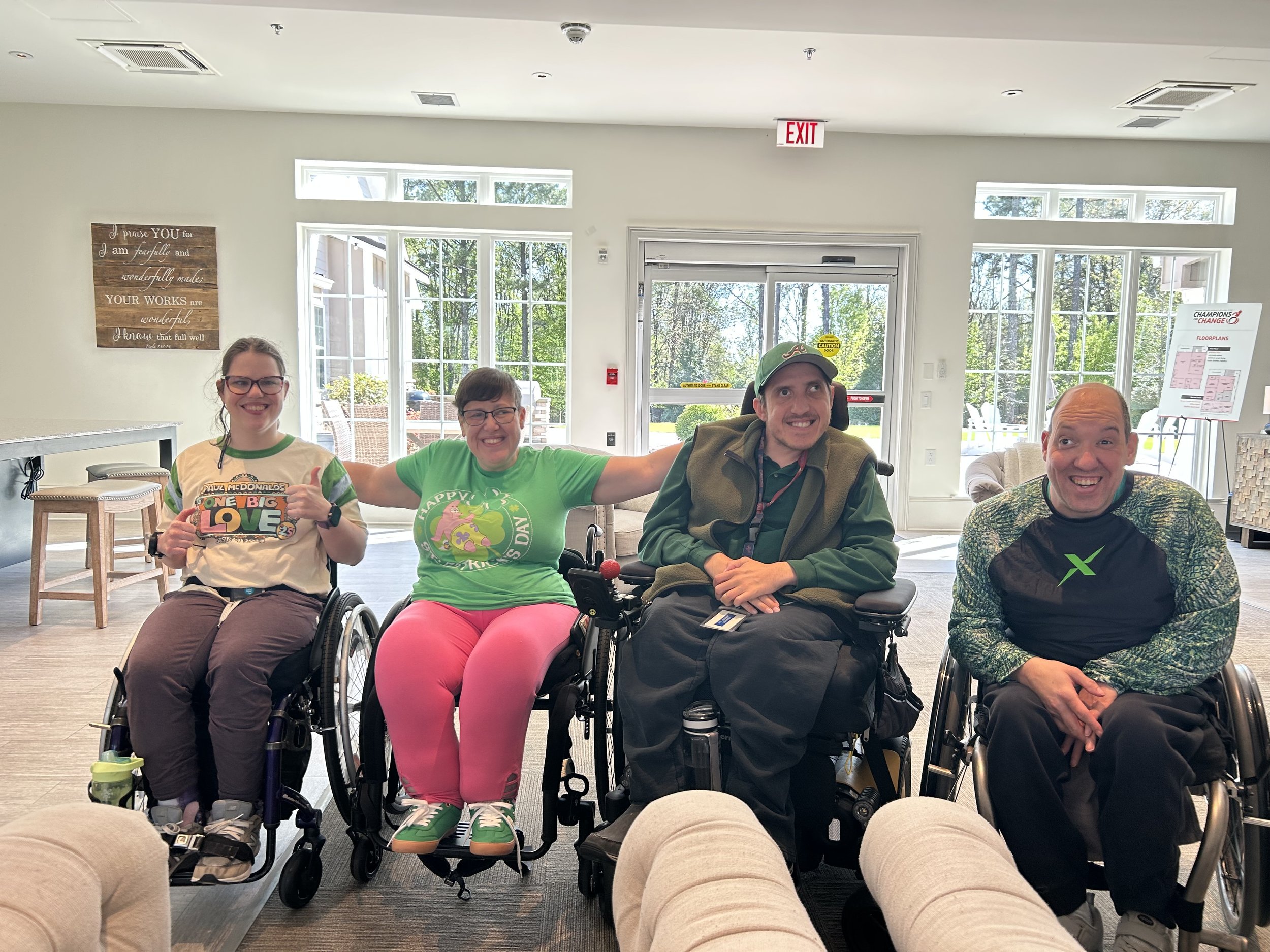
From left, residents Noelle Ford, Sarah Grace, Adam Laarhoven and Josh Cusick smile after participating in a group rowing workout session at Champions Place
HANNAH YAHNE/APPEN MEDIA
ROSWELL, Ga. — For Alison Schwab, living at Champions Place in Roswell alongside 13 other physically disabled young adults is the college experience she never had.
“This has been adulthood with training wheels, and it’s been really nice to have this safety net and knowing that all of these people have my back,” Schwab said.
Schwab has grown up alongside most of the residents since she was 11 and started playing wheelchair sports with them through the Titan Program, another arm of the Champions Community Foundation.
The Champions Community Foundation was founded in 2009 by Rick and Nancy Thompson, with the help of friends and other families with physically challenged children, to fight the isolation and depression that young adults with conditions, such as cerebral palsy, muscular dystrophy, spina bifida or personal injury, can face after aging out of high school.
Two of the Thompson’s three kids were born with a rare form of muscular dystrophy – their daughter passed away when she was 3. Matthew, their second son, was once expected not to live past 10, but is now in his 30s.
When Matthew was nearing the end of high school, Thompson found his life’s calling starting the Titan Program which has grown to offer wheelchair sports and social events to more than 130 individuals. That turned into a dream of offering people in this community a safe and accessible independent living environment.
The importance of this is amplified during March, National Developmental Disabilities Awareness Month. In 2024, nearly 500,000 Georgians ages 15 and older were living with a disability that impacts their independent living abilities, according to the Center for Research on Disability. Nationally, that number raises to 16.2 million individuals with independent living disabilities.
Thompson said people have come from across the country to see what Champions Place offers and walked away encouraged once they see that independence is possible for their loved one.
The Champions Community Foundation partnered with Georgia Tech and Google to develop a solution that provides assistive technology that helps residents control their fans, televisions, lights and make hands-free calls.
Champions Community Foundation recognized that the ability to live independently is something they had to share with others who aren’t living at Champions Place. So, they launched Champions Place @ Home and have equipped 54 homes with physically challenged young adults with the same technology.
“For the first time, the parents in this community are going places and seeing things because they can,” Thompson said. “Because of the infrastructure and support, they’re not worried about it.”
Since opening in 2020, Champions Place offers a social hub to those involved in the Champions Community Foundation. Volunteers host monthly events, such as trivia and movie nights, and they throw holiday parties and fundraisers on-site.
For those unable to make in-person events, the nonprofit created Champions Community Connect, an online option for people to participate in events like Bible studies and bingo nights. They offer an “Around the World” series that teaches about different cultures by “traveling” to various countries – next month is the Galapagos Islands.
“So, if you are a physically challenging adult and you’re in the Metro Atlanta area, you instantly have a community where you can … just be together,” Thompson said.
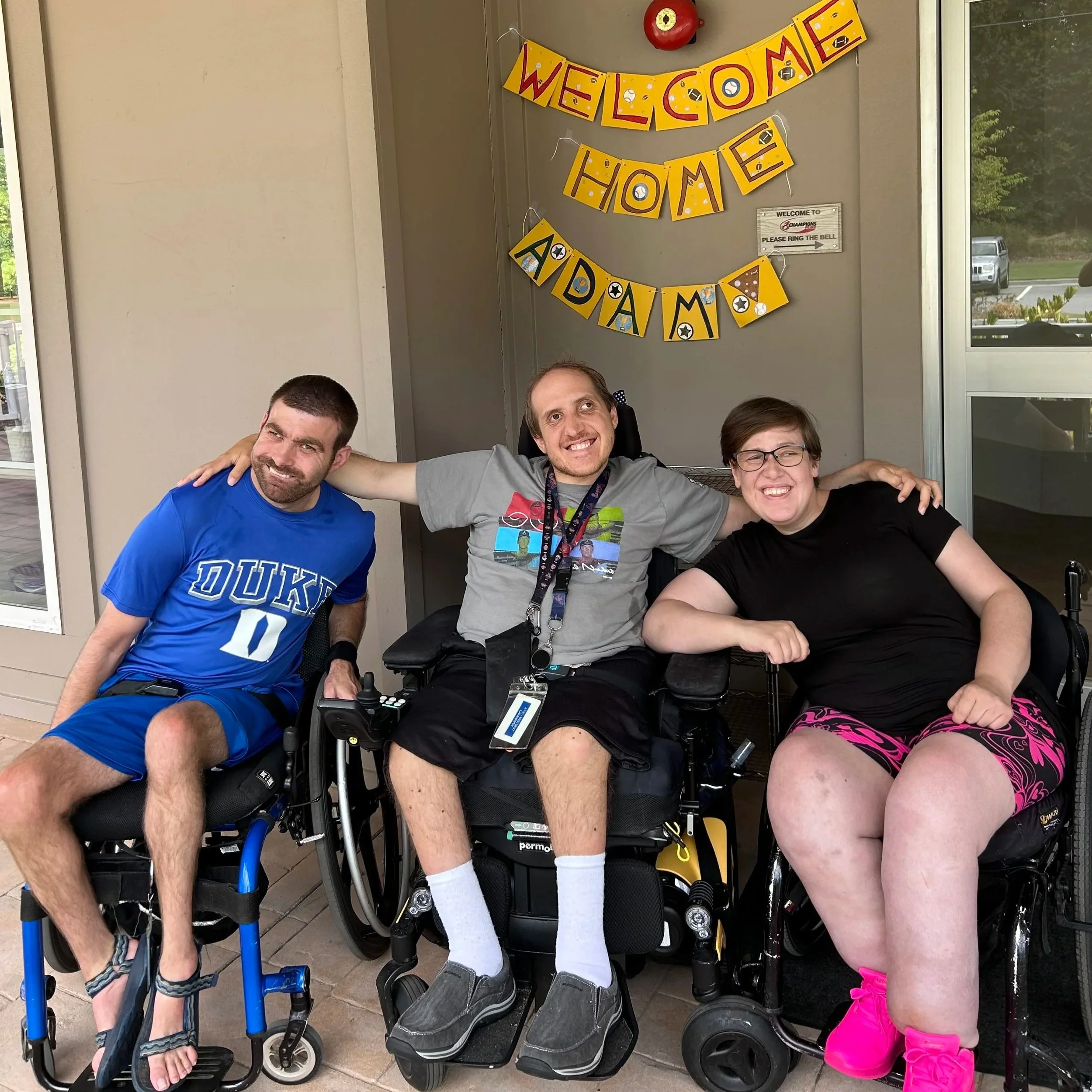
Residents Matt Thompson, left, and Sarah Grace, right, welcome resident Adam Laarhoven, center, home to Champions Place after a hospital stay.
The building contains four residential “quads,” each with four bedrooms and bathrooms, a kitchenette, laundry machines and television. Common spaces are spread throughout the house, such as fire pits, dining area, family room and kitchen.
Volunteers cook dinner, host events in the family room, like group workouts or karaoke, or invite residents out to play adaptive golf and other sports.
“We’ve changed their lives and their parents’ lives,” Thompson said. “And there’s over 500 volunteers a year that have changed perceptions and all that, but it doesn’t stop there.”
Most of the residents at Champions Place are employed, mainly at retail or customer service jobs. Thompson said the residents have learned that they can have purpose through jobs, through volunteering and community.
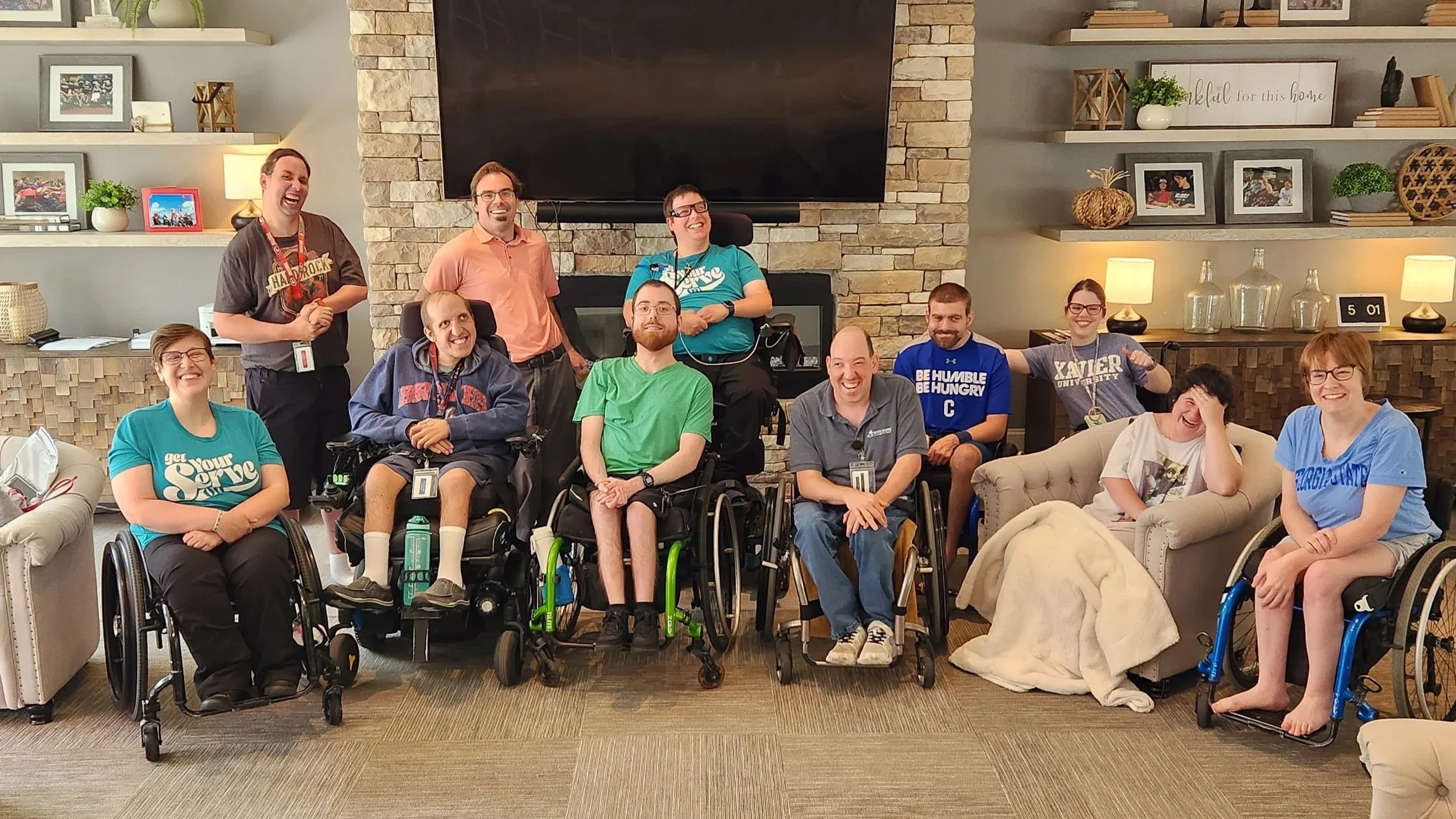
Residents at Champions Place gather for a photo in the family room.
“It’s words like self-reliance, self-esteem and purpose,” Thompson said. “They are fiercely independent!”
The independent living community has plans to expand resident capacity by 40 percent by late 2027. Plans for a new two-story building will offer four more resident rooms and two in-house staff apartments. The building will accommodate two occupational therapy students from Georgia State on call overnight in exchange for apartment housing at Champions Place.
With this addition, Thompson said they’re going to welcome six new families.
The Champions Place Foundation is fundraising $4 million to construct the new living space, and Thompson said they’re at about 75 percent of that goal in nine months.
“Sometimes I think we’re in the hope business,” Thompson said. “We give people hope. They’re in despair and we give them hope.”
It’s all laughter and chit chat when residents gather in the family room. They joke with one another and greet volunteers as they come and go from the building. Despite residents’ ages spanning from 26 to 42, they’ve bonded through their shared experiences.
“I’m not related to them by blood, obviously,” resident Josh Cusick said, “but I do think of them as my chosen family.”